Faster route after Lahore cotton sitting
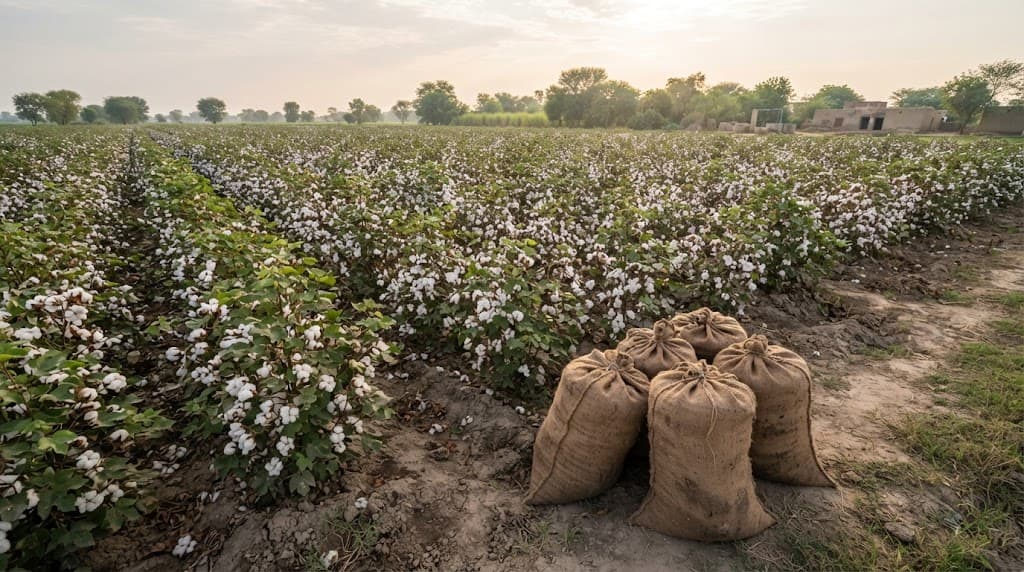
Pakistan’s food security ministry has backed a cotton seed import push meant to put fresh commercial varieties into fields sooner and lift yields. In Lahore, Minister Rana Tanveer Hussain led a cotton revival session that also endorsed a shorter path for clearing foreign cultivars, aiming to compress biosafety and field work from roughly seven years down to about 12–18 months.
Shahzad Ali Malik, who heads Guard Agricultural Research & Services, put the package on the table. Participants accepted it without dissent. Officials said the file will go to the prime minister in the coming week for a final green light.
Why today’s clearance takes so long
Under rules now in force, an overseas cotton cultivar typically faces a multi-stage gauntlet: a year of biosecurity checks, two years of biosafety work, a company trial year, two years of National Coordinated Varietal Trials (NCVT — joint official yield tests), then a final year for formal nod. Malik warned that sticking to that sequence would delay any real turnaround until 2033. The accelerated model, which ginners, textile mills and the Pakistan Hi-Tech Hybrid Seed Association support, would target progress by 2028.
Malik urged swapping the long biosecurity screen for a lab certificate on diseases carried in seed, which he said could finish that step in about a fortnight. He also argued that biosafety work and NCVT should run side by side for a single year — a pattern used in 2009-10 — with the last administrative stamp taking roughly a month.
Trade papers, China hybrids and local breeding
For material brought from abroad, the package seeks quicker CIPs (import permits) and earlier pest risk analyses (PRAs — country-level insect and disease reviews) with other cotton producers. It covers open-pollinated lines from several origins and calls for hybrid know-how from China.
On domestic supply, it wants stronger public breeding: overseas germplasm for researchers, incentives and clear performance goals for breeders, and private firms allowed to use public germplasm banks. The sitting also pressed for an early huddle of the National Seed Development and Regulatory Authority, the Federal Seed Certification and Registration Department, the National Biosafety Centre, the Pakistan Central Cotton Committee, plus provincial seed councils and agriculture departments in Punjab and Sindh.
Aasan alfaaz mein
Sarkar ne kapas ke bije bahar se lane aur unhein jaldi manzoor karne ka plan support kar diya hai. Pehle yeh process lagbhag saat saal leta tha; ab 12 se 18 mahine ka target hai. Plan agle hafte wazir-e-azam ke paas jayega. Agar yeh chal gaya to kisanon ko nayi qismein pehle mil sakti hain aur fasal behtar hone ki ummeed hai.