The World Bank’s independent Inspection Panel will visit Pakistan from 2 to 10 November 2026 to examine complaints from 15 individuals in two Punjab villages over the 765 kilovolt transmission line built under the Dasu hydropower project. The complainants say compensation has been inadequate, ancestral farmland has lost much of its value, and living near the high-voltage corridor poses safety risks, especially for children.
The Request for Inspection, filed on 24 July 2026, concerns World Bank additional financing for Dasu Hydropower Stage-I transmission works (project code P167843). In April 2020 the Bank approved an extra credit of about USD 700 million for the power-evacuation infrastructure. That package includes a 255-kilometre, 765kV high-voltage alternating current line from Dasu Stage-I to the Islamabad West Substation, plus a substation at Mansehra.
What the complainants allege
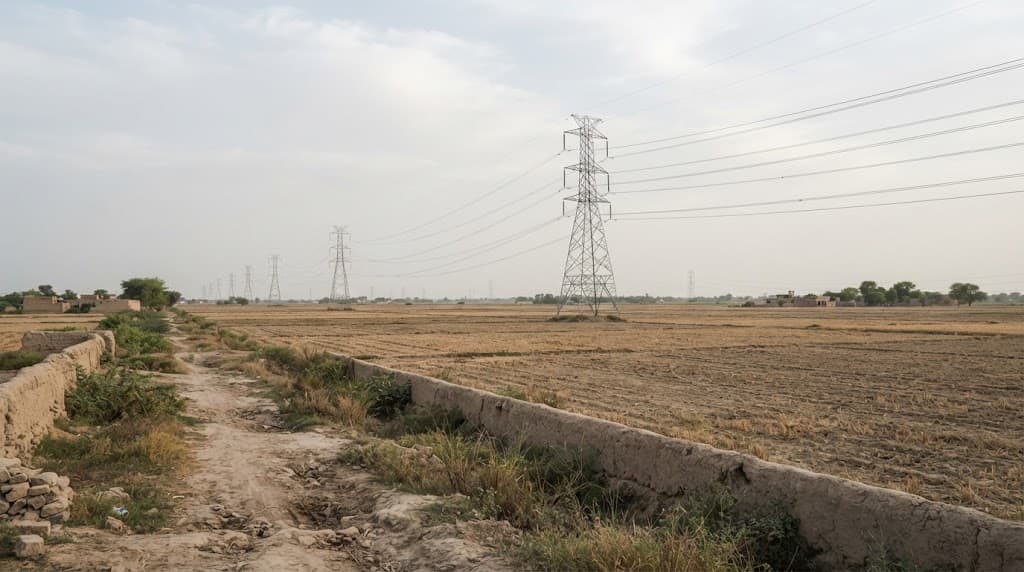
According to the complaint, the line crosses ancestral farmlands in the Tanda area of Punjab and has caused lasting harm to the families and wider community. They say payouts for acquired land fall short, while Right of Way (RoW) rules on remaining land—no new buildings or structures, and trees limited to 2.5 metres—have sharply cut economic value and future development options. The complainants put the land-value loss at about 80 percent and say plans for homes and a dairy farm can no longer go ahead.
They also raise safety worries where the corridor runs close to homes, fields and commercial property, and question whether consultations and disclosure—especially of the Resettlement Action Plan—were adequate during project preparation.
How the World Bank inspection panel process works
The Inspection Panel is the Bank’s independent complaints body for people who say a Bank-financed project has harmed them, or may do so. It gathers facts separately from Bank management and from complainants, and reports to the Bank’s Board of Executive Directors. It does not investigate Pakistan’s government or its agencies.
The panel has finished early due diligence, meeting the complainants on 21 August 2026 and Bank management on 26 August 2026. It found the request admissible and registered it on 11 September 2026. The November trip is part of the eligibility assessment: an early step to meet stakeholders, review documents and decide whether a full investigation is warranted. Registration and this visit do not mean a formal investigation has already been approved.
Meetings planned during the visit
The delegation will be led by panel chairperson Ibrahim James Pam, with Serge Selwan, Dion Lorenz Romano and Margaret Seijo Scotti. It has sought talks with the Ministry of Economic Affairs, the Ministry of Energy, the National Grid Company (NGC) and other agencies, and will also meet other project stakeholders. In a letter dated 27 October 2026, World Bank Country Director for Pakistan Bolormaa Amgaabazar asked for a meeting with the Ministry of Energy (Power Division) on 5 November from 3:00 pm to 4:00 pm to hear the government’s view of the issues raised.
The requesters did not ask for confidentiality but have voiced fear of possible retaliation after filing the complaint. The Bank has asked for early mission clearance so the visit can proceed smoothly.
Timeline: what has happened so far
- April 2020: World Bank approves about USD 700 million in additional credit for Dasu Stage-I transmission infrastructure.
- 24 July 2026: Fifteen individuals submit a Request for Inspection over the transmission line.
- 21–26 August 2026: Panel meets complainants, then Bank management, as part of initial due diligence.
- 11 September 2026: Complaint registered after the panel finds it meets admissibility criteria.
- 27 October 2026: Country director seeks a 5 November meeting with the Power Division.
- 2–10 November 2026: Planned eligibility-assessment visit to Pakistan.
Stage-I of the wider scheme aims for a 2,160-megawatt plant on the Indus River to add renewable supply and strengthen WAPDA’s (Water and Power Development Authority) ability to prepare future hydropower work. The Bank has described the overall effort as a high-risk, high-reward push for lower-cost, non-carbon power. The panel’s recommendation after the visit will show whether a deeper probe of the transmission-line complaints should follow.
Aasan alfaaz mein
World Bank ka alag inspection panel 2 se 10 November 2026 Pakistan aayega. Punjab ke Tanda ilaqe ke 15 logon ne Dasu ke 765kV transmission line par shikayat ki hai ke muawza kam hai, zameen ki qeemat gir gayi hai aur bijli ki line ke qareeb khatra hai. Abhi yeh sirf shikayat check karne ka pehla stage hai—poori tahqiqat abhi manzoor nahi hui. Mutasir logon ke liye iska matlab yeh hai ke unki zameen, ghar aur safety ki baat bank ke board tak pehnch sakti hai.