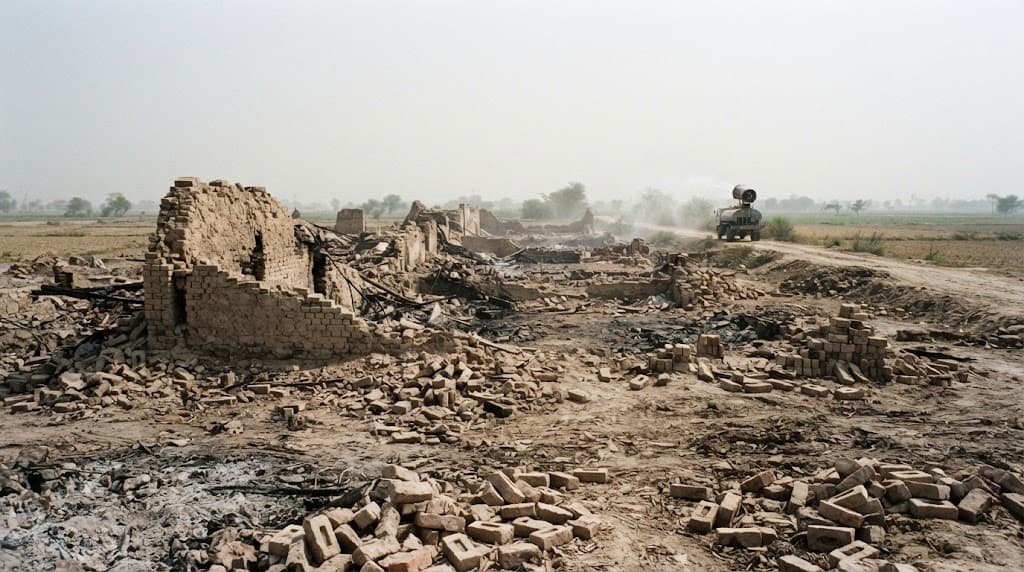
The Environment Protection Agency (EPA) Punjab has demolished 197 non-compliant brick kilns in a month-long anti-smog Punjab crackdown, sealing 163 units and registering 162 first information reports (FIRs) as the province moves to cut emissions before peak winter haze.
Official figures for 28 September to 27 October 2026 show enforcement teams combining field checks, drone surveillance and special night squads. Director General Environment Abdullah Nayyar Sheikh said the department was following a data-driven, zero-tolerance approach to protect public health, with teams active day and night so polluters could not avoid inspection.
Brick kilns and industrial sites under pressure
Brick kilns were a central target of Punjab anti-smog measures. EPA squads carried out 11,580 kiln inspections, issued 314 smog notices, demolished 197 non-compliant kilns, sealed 163 units and registered 162 FIRs. Fines linked to that work totalled Rs40.7 million. Officials say kilns that ignore environmental rules can worsen air quality as colder weather traps pollution.
Industry was another focus. Teams conducted 6,650 industrial-site inspections, demolished 22 non-compliant units, issued 333 smog notices, sealed 191 premises, registered 15 FIRs and collected Rs28 million in fines. In a separate check on industrial emissions controls, officers visited 4,204 facilities over suction-hood requirements—hoods meant to capture smoke at the source. They found 1,863 units had installed the mandatory equipment, issued 1,388 notices, sealed 333 non-compliant sites and imposed Rs2.0045 million in penalties.
Plastic burning, dust and water checks
Action against plastic burning covered 6,064 inspections. Officials issued 678 notices, sealed 152 premises, confiscated 45,100 kilograms of plastic and imposed about Rs2.0015 million in fines. Construction dust drew visits to 397 union councils, 181 notices, 20 sealed locations, Rs25,000 in fines and mist sprinklers at 49 sites. Water-pollution teams made 56 visits, issued 29 notices and sealed two units.
Anti-smog guns, farm fires and what comes next
Alongside urban and factory enforcement, the Punjab government has deployed 67 Quick Response Units across major farming belts to fight stubble burning. The teams use satellite fire detection, ground intelligence and field monitoring to put out crop-residue fires and act against those responsible.
In Lahore, the agency is running anti-smog guns under a targeted plan. Mr Sheikh said placement follows ground pollution levels, air-quality index readings, particulate monitoring and wind. The high-capacity mist cannons spray fine water droplets meant to bind with dust and bring some particles down; crews site them on major roads, busy corridors, industrial edges and dusty construction zones. He stressed that the equipment backs, rather than replaces, action at pollution sources, and warned that heavy fines, FIRs and immediate sealing will continue, with enforcement, drone and quick-response teams staying on alert as smog season nears.
Timeline: what has happened so far
- 28 September 2026: Month-long EPA Punjab pre-smog enforcement window begins across the province.
- 28 September–27 October 2026: Teams record 11,580 brick-kiln inspections, demolish 197 kilns, seal 163 units and register 162 FIRs.
- Same period: Industrial, plastic-burning, suction-hood, construction-dust and water-pollution inspections run in parallel, with millions of rupees in fines recorded.
- Through the campaign: Sixty-seven Quick Response Units operate in agricultural belts against stubble burning; anti-smog guns are deployed extensively in Lahore.
- 28 October 2026: Enforcement data for the month is reported from Lahore as peak smog season approaches.
Aasan alfaaz mein
Punjab EPA ne ek mahine mein 197 ghalat brick kiln tor diye hain. Kai units seal hue aur FIRs bhi darj huin, taake dhuan aur dust kam ho. Lahore mein anti-smog guns pani ki bhari spray se hawa ke particles giraane ki koshish karti hain. Sardi se pehle yeh qadam aam logon ki saans aur sehat ke liye hain.