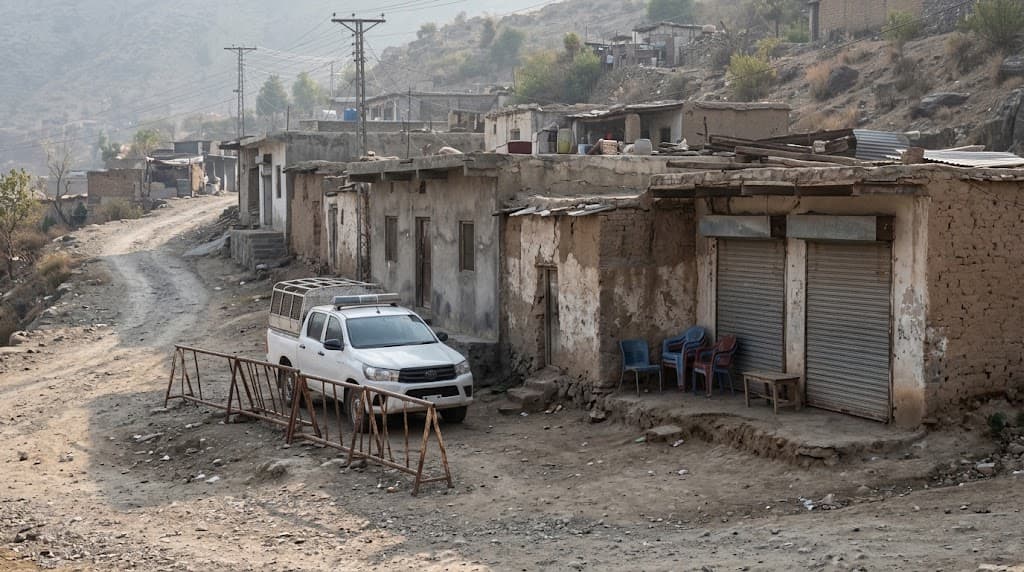
Rana Sanaullah, the Prime Minister’s Adviser on Political Affairs, has warned of a risk of “collateral damage” during ongoing anti-terror operations in Khyber Pakhtunkhwa. He said the risk applies if residents neither remove terrorists from populated areas nor move aside for security forces. He made the remarks in an interview on the programme Naya Pakistan, as the province remains under emergency and governor’s rule imposed on October 11.
What Sanaullah said about the operations
Sanaullah said intelligence agencies knew the number and locations of the terrorists, and he described their intelligence work as “perfect”. He said intelligence-based operations were being conducted in sensitive areas. According to him, terrorists operate in groups of three to 15 people, and 70% of such groups are present in those areas, mixed in with or living among residents. The 70% figure is Sanaullah’s own claim and has not been independently confirmed.
He said residents had been asked to remove the terrorists from populated areas. “If the residents do not want to remove them, they should move aside so that the operation can be conducted,” he said. “If neither of these two options is possible, then there will be a risk of collateral damage.” Collateral damage is harm to people or property that falls on those not targeted in an operation.
Sanaullah accused the provincial government led by Sohail Afridi, which he called dysfunctional, of discouraging people from cooperating with law enforcement agencies. He said Khyber Pakhtunkhwa was now run under a setup headed by the governor. He described eliminating terrorism as the “priority objective” of that setup, and claimed it could be achieved within “weeks and months” if the administration fully cooperated. He said the government expected PTI to cooperate in the fight against terrorism.
Emergency and governor’s rule
President Asif Ali Zardari imposed the emergency and governor’s rule in Khyber Pakhtunkhwa on October 11. The move effectively sidelined the PTI-led provincial government amid what the presidential proclamation called a “deteriorating” law and order situation. The president acted on Prime Minister Shehbaz Sharif’s advice under Articles 232 and 234 of the Constitution, which deal with emergency powers, after the federal cabinet made its recommendations.
The proclamation cited a surge in terrorist attacks and extremist activity, including attacks on infrastructure, government installations and law enforcement agencies. It also said the provincial government had not shown the “ownership, will and intent” needed to tackle terrorism and lawlessness.
Shehbaz said on Thursday that the step had been taken “under extreme compulsion”. He criticised PTI over the worsening security situation and said the province had been a “cradle of peace” six years ago. He promised that, with the cooperation of the field marshal, happiness would return to the province and that it would receive development on par with other provinces.
On talks, Sanaullah said the government was willing to meet the opposition leader at the Prime Minister House. “If the opposition leader comes to the Prime Minister House, we will make him sit there and offer him tea,” he said. He referred to TTAP chief Mahmood Achakzai as “our brother” who had supported the government in the past, but criticised Achakzai’s insistence on an unspecified matter as unbecoming of a leader of his stature.
Aasan alfaaz mein
Rana Sanaullah ne khabardar kiya hai ke Khyber Pakhtunkhwa mein anti-terror operations ke dauran agar log dehshatgardon ko aabadi wale ilaqon se nahi hataenge aur raasta nahi denge, to nuqsaan ka khatra hai. 11 October se is soobe mein emergency aur governor’s rule laagu hai, aur hukoomat kehti hai ke dehshatgardi khatam karna sab se ahem maqsad hai. Aam shehri ke liye iska matlab hai ke sensitive ilaqon mein security operations ho sakte hain, aur raaston ya rozmarra ke kaamon par asar pad sakta hai. Abhi ye saaf nahi ke yeh amal kab tak chalega.