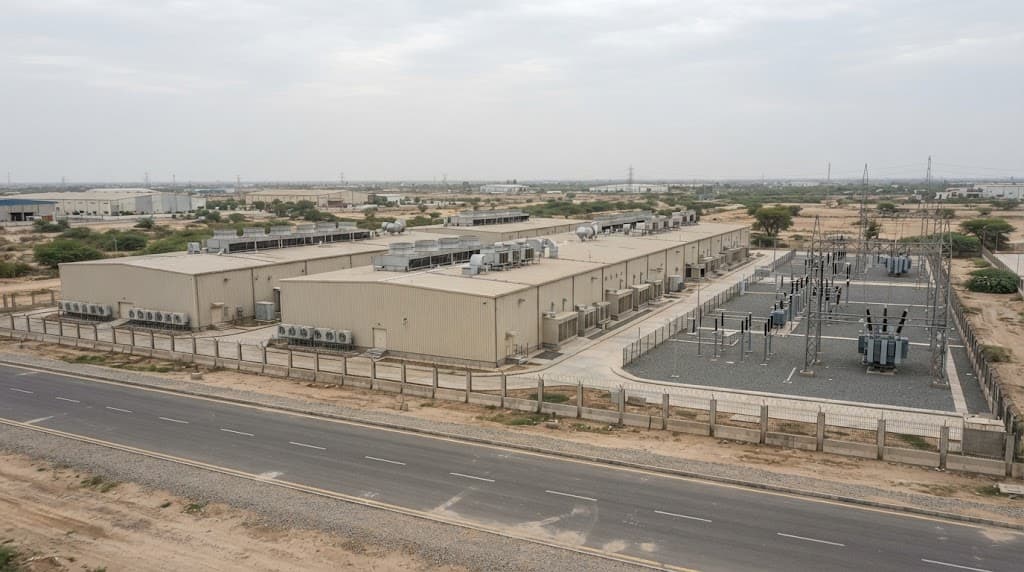
OpenAI says it will pilot its Grid Protectors Program at an upcoming data center in Effingham County, Georgia, promising to free up to 1,000 megawatts of electricity during extreme weather or other emergencies—enough, the company says, to run air conditioners in about 700,000 homes.
How the Grid Protectors plan is meant to work
In a Monday announcement, OpenAI cast the power plants that will feed its new AI facilities as more than private supply. The company argues those plants can become “a resource that utilities can call on when communities need it most,” by dialling back campus demand or making capacity available when the wider system is under strain.
OpenAI, which now prefers the label “compute campuses” for its AI data centers, says year-round demand can help utilities spread fixed grid costs across more electricity sales, while flexibility lets the campuses cut use at peak times. “Electricity demand also rises and falls with the seasons, with different regions facing their biggest peaks at different times,” the company said. It added that it will keep working with policymakers and utilities on arrangements so future campuses reduce demand when the grid is stressed.
Why the Georgia pilot matters now
The Effingham County OpenAI data center Georgia pilot arrives as local opposition to large data centers has grown across the United States. Projects have often advanced with little resident input, and several states—including Tennessee, Florida, Oklahoma and Oregon—have passed laws aimed at stopping AI firms from shifting energy costs onto households, alongside moratoriums and other limits.
Elsewhere, residents in Utah protested after Box Elder County approved a data center expected to use more than double the state’s peak electricity demand in 2025, and to dump heat into the surrounding desert valley. A recent study by the Houston Advanced Research Center (HARC) also warned that powering proposed Texas data center projects could erase decades of air-quality gains within about five years.
Stargate and what comes next
Alongside the Georgia campus, OpenAI is partnering with Oracle and SoftBank on its Stargate data centers in other US counties, including Shackelford County and Milam County in Texas and Doña Ana County in New Mexico. OpenAI says it will continue seeking agreements so future sites can ease pressure on the power grid when emergencies hit.
For readers in Pakistan watching global AI build-outs, the announcement is a reminder that large compute sites are being sold not only as tech hubs but as negotiated players on local electricity systems—promises that will be judged by whether utilities can actually call on that capacity when storms or heatwaves arrive.
Aasan alfaaz mein
OpenAI Georgia mein naya data center bana raha hai aur kehta hai ke emergency mein woh bijli wapas grid ko de sakta hai. Yeh program Grid Protectors kehlata hai, aur company ke mutabiq 1,000 megawatt tak free ho sakti hai. Itni bijli lagbhag 700,000 gharoun ke air conditioners chalane ke barabar batayi gayi hai. Seedha matlab yeh hai ke AI campuses ab sirf bijli khane wale nahi, balkay crisis mein madad ka daawa bhi kar rahe hain—asli faida tab samjhega jab utility companies is reserve ko use kar saken.