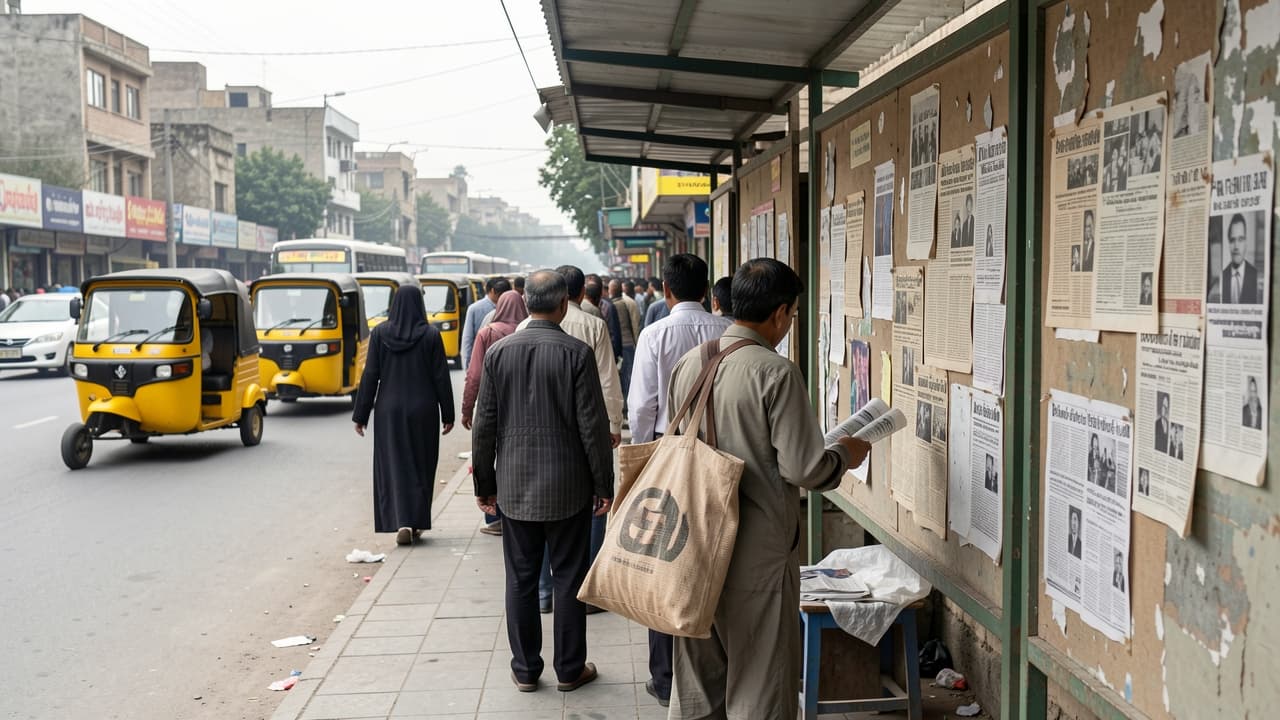
Pakistan's poverty rate has risen from 22% to 29%, the World Bank said in its most recent economic review of the country. The Bank linked the rise to job creation that has not kept pace with a growing workforce, along with rising prices and weak growth in output and productivity. Household incomes have come under pressure as a result.
Jobs are not keeping up with new workers
According to the Bank, one in six people who have joined Pakistan's labour market in the years since 2018 has remained without work. Roughly 3.6 million people reach working age every year, so the economy must keep generating new jobs just to avoid falling further behind.
The jobless rate was 7% in 2024. Women and young people were overrepresented among those without work, the report noted.
Pakistan added 17.7 million jobs over the same period, but the Bank said most were in low-wage sectors with low productivity. That limited how much the new work could raise household earnings and living standards.
Why Pakistan's poverty rate rose
The World Bank put the seven-percentage-point increase in poverty partly down to severe inflation, meaning a sharp and sustained climb in consumer prices, and to sluggish economic growth. Rising living costs have added to the strain on households, while limited productivity gains have restricted how much workers can earn.
Labour productivity, which measures how much output each worker produces, grew by only 0.4% a year on average across the decade to 2024, according to the report. That slow pace sits at the core of the problem, because Pakistan needs jobs that absorb new entrants and also pay better.
What happens next
The report stresses the need to speed up sustainable economic growth, raise labour productivity and widen access to better quality jobs. Without stronger employment and higher earnings, the Bank's findings suggest Pakistan will struggle to reduce poverty and improve living standards. The findings are a reminder that headline job numbers alone do not lift families out of hardship; the quality of work matters as well.
Aasan alfaaz mein
World Bank ki nayi report ke mutabiq Pakistan mein ghurbat ki sharah 22 fisad se barh kar 29 fisad ho gayi hai. Naye log kaam dhoondhne aa rahe hain, lekin utni naukriyan nahin ban rahi, aur mehngai ne ghar ke kharche barha diye hain. Iska matlab hai ke aam gharon ke liye rozgar aur aamdani dono mushkil ho gaye hain. Behtar aur zyada tankhwah wali naukriyon ki zaroorat hai.